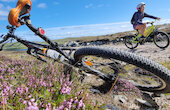
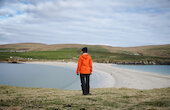
Yell is one of the three North Isles and the second largest of the Shetland Islands. Covering 83 square miles, it offers diverse coastal scenery, beaches, wild moorland, small settlements, wildlife and rich history to explore.

A quick introduction

Yell is a rectangular-shaped island much of which is covered in peaty moorland and grazing sheep, who often quite happily wander out onto the open road – so drivers beware! The untouched moorland is interspersed with coastal crofting communities, the largest of which is Mid Yell.

The island has been inhabited since Neolithic times and there are 12 known broch sites. The Vikings settled during the Norse period, as is evident in placenames like Dalsetter and Gossawater. In the 17th century, Burravoe in Yell became an important Hanseatic trading post and the fishing industry was an important part of the island's economy right up to the 1950s.

About 1,000 people live in Yell and you’ll find a lifestyle which blends tradition with innovation and a progressive outlook. In 2014, Yell became the site of the world's first community-owned tidal power generator. While this tidal turbine was decommissioned in 2016, the community-owned Garth Wind Farm opened in 2017 and continues to support community initiatives, including the development of the largest community-owned industrial estate in Europe. Yell is also home to fishing and aquaculture industries, including sea angling excursions.

How to get to Yell

Scheduled daily ferries run from Toft in the north Mainland to Ulsta in Yell. You can also take the car ferry onwards from Yell to Unst and/or Fetlar.

There are various bus services throughout Yell, and also to/from Lerwick. See the ZetTrans website for the latest timetables.

Where to stay

There's a range of self-catering and bed and breakfast options in Yell; see our Accommodation page.
Download a printable Yell Visitor Leaflet

Find out morearrow-right

Things to see and do in Yell

Useful information
  • There are shops in Burravoe, Aywick, Mid Yell and Cullivoe.
  • Public toilets can be found at the ferry terminals at Ulsta and Gutcher, and at Cullivoe Pier.
  • Fuel is available at Aywick and Cullivoe.
  • You can berth your boat or yacht at the piers found at Ulsta, Burravoe, Cullivoe and Mid Yell. See the Sail page for more information.

Outdoor activities

Wildlife watching

There are nationally important nature reserves such as the RSPB's Lumbister, the Yell Sound islands and the island of Hascosay. But the whole area teems with wildlife, especially during the summer, so there's always something to delight birdwatchers, hill walkers or casual strollers.

Yell has especially desirable 'real estate' for wandering families of otters because there's plenty of low-lying peaty shoreline where they can excavate holts with good fresh water supplies.

With luck and binoculars, you may spot harbour porpoises some distance offshore or, less frequently, dolphins and orcas, particularly in Bluemull Sound and Yell Sound. Local ferrymen often keep notes of cetacean sightings and are pleased to share information with passengers if you ask what they've seen today.

Yell was home to a famous Shetland naturalist, musician and author, the late Bobby Tulloch, the RSPB representative here for many years. As well as logging rarities like Fetlar's Snowy Owl, Bobby did much to publicise Shetland's treasure house of commoner birds, animals and plants worldwide. At the Old Haa there's a special section devoted to Bobby's wonderful collection of wildlife photographs, most of them taken in his native island.

Walking in Yell

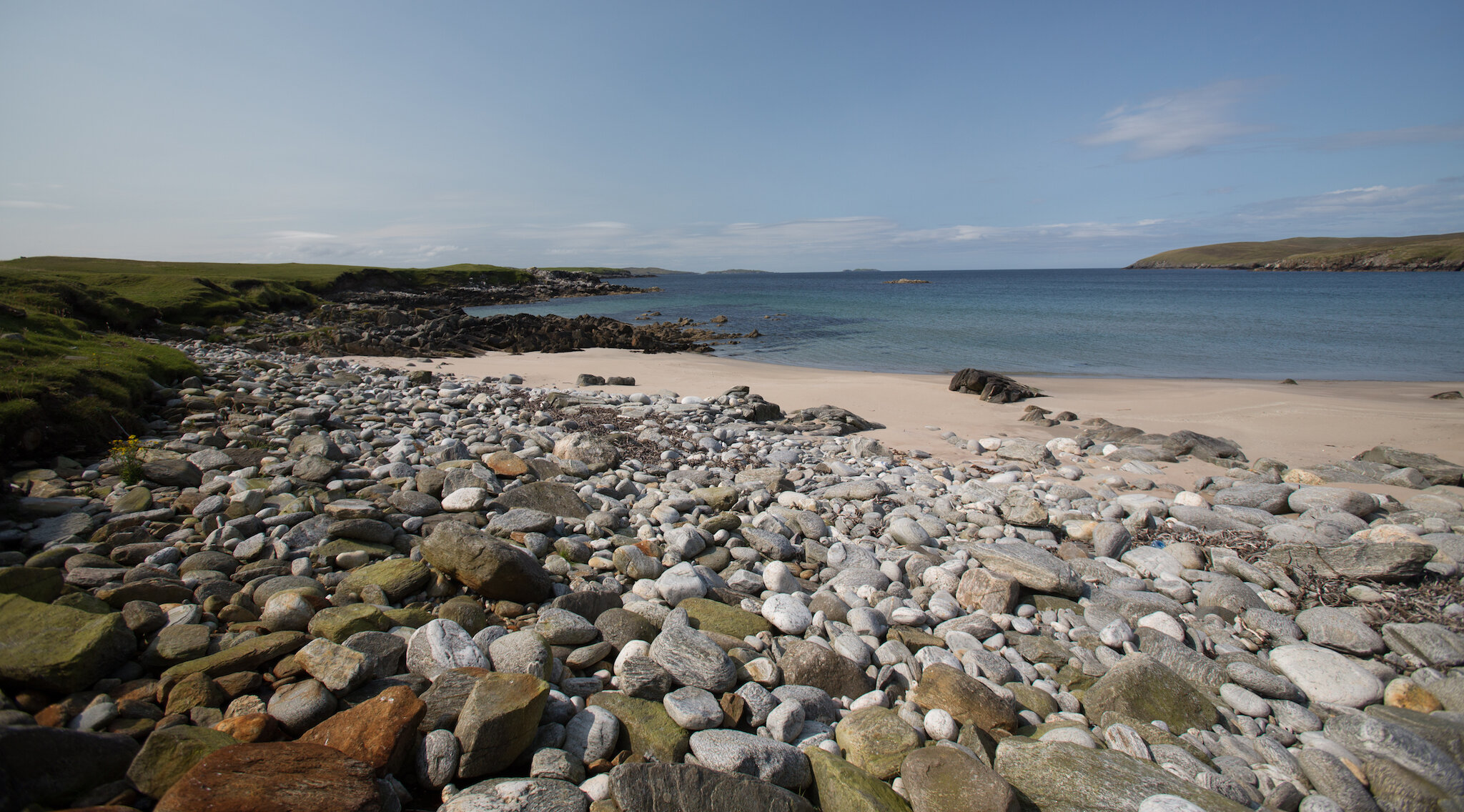
Yell is blessed with some of Shetland's most beautiful beaches, including two award-winning beaches: Sands of Breckon and West Sandwick. The beaches at Gossabrough, Vatsetter and Hamnavoe and the double tombolo at Ness of Sound are also well worth visiting. If you're looking for self-guided walks around Yell, see the Walking section of this website.

Fascinating facts

  • There are multiple theories behind the distinctive island name 'Yell'. According to Wikipedia, it may have originally been a Pictish name, or the Proto-Norse was 'Jala' or 'Jela', which may have meant 'white island' referring to the beaches. Or then there's the Old Norse 'Gjall', which means 'barren'.
  • Excavations have been made of an Iron-Age settlement at the Tafts of Bayanne at Sellafirth. Information about the site is available at Bayanne House where there are also facilities for family history research.
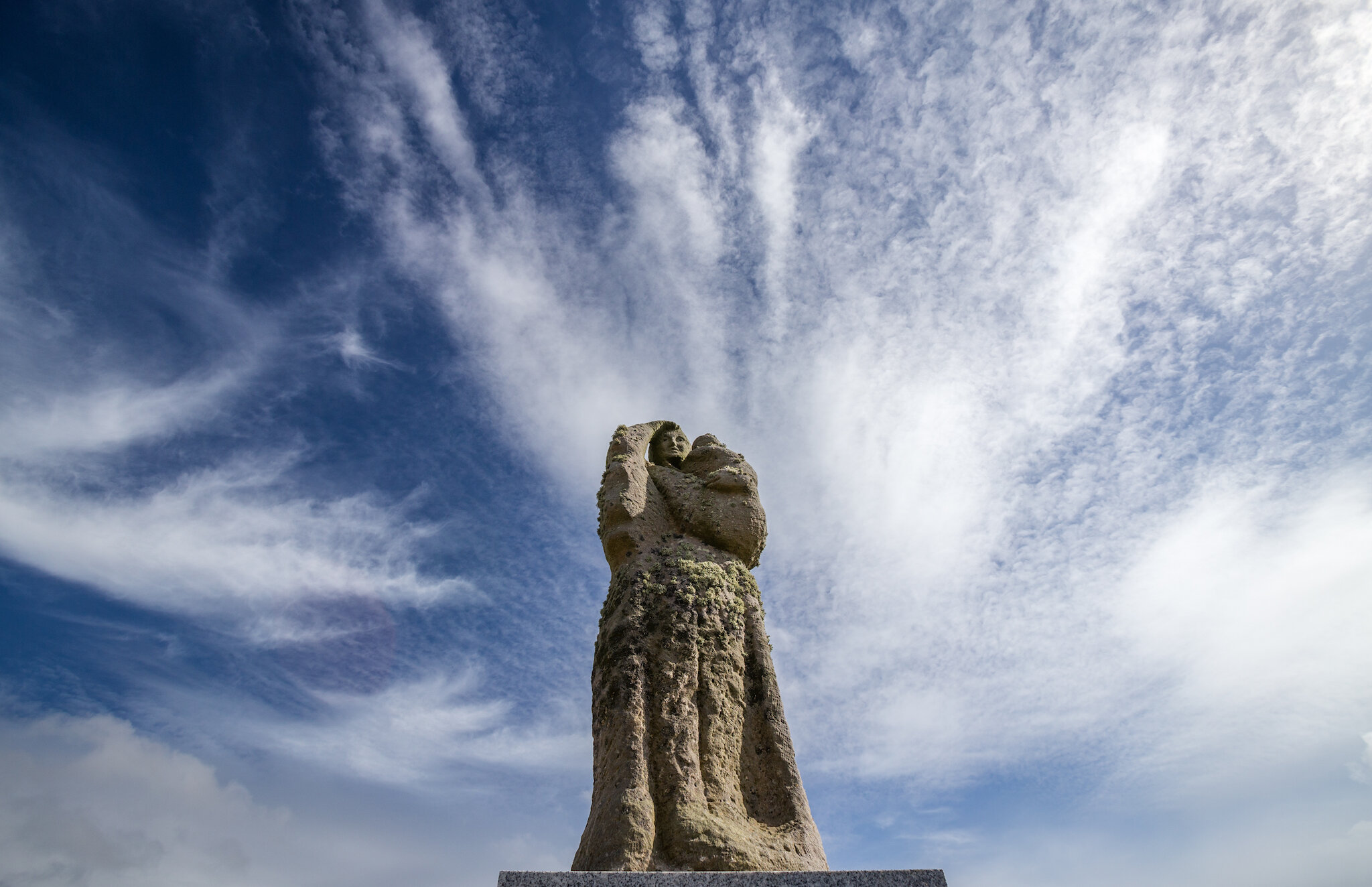
  • On 21 July 1881 a fierce storm hit Shetland, resulting in the death of 58 haaf fishermen near Gloup Voe, west of Cullivoe. It was one of Shetland's biggest fishing tragedies, leaving behind 34 widows and 85 orphans. There’s a poignant memorial commemorating those lost at Gloup and a nice walk down to the beach below.

Find out more about Yell